
Direct Answer
To calculate how many pavers you need for a Seattle rain garden path, multiply your path’s length by its width to get the total square footage, divide by the square footage of one paver, then add a 10–15% waste factor for cuts and curves.
- Multiply path length × width to get square footage; divide by paver size to get quantity
- Always add 10% waste for straight paths; up to 15% for curved rain garden layouts
- Use permeable pavers — they allow water to infiltrate the soil rather than pool or flood
- Common sizes: 4×8″ (≈500 per 100 sq ft), 12×12″ (≈110 per 100 sq ft), 16×16″ (≈63 per 100 sq ft)
- Seattle’s RainWise rebate can cover most or all of your installation cost if you’re in an eligible CSO basin
- Herringbone is the strongest pattern for high-traffic paths; running bond works well for lighter walkways
Seattle homeowners know that managing water is the ultimate challenge in any PNW landscape design. With our region’s heavy rainfall between October and April, sustainable landscaping isn’t just a trend, it’s a necessity for protecting your property’s foundation and value.
A rain garden is a beautiful, eco-friendly way to handle this runoff, but connecting it to your home with a functional path requires precision and the right materials. Whether you’re looking to install a rustic natural stone garden path or a structured, modern walkway, the first question is always: “How many pavers do I need?”
Getting this number right prevents expensive mid-project delays and ensures a cohesive look for your outdoor space. At Green Spaces Landscaping, we specialize in helping Seattle and Eastside homeowners navigate these technical details to create stunning, water-wise retreats that stand up to our wet climate.
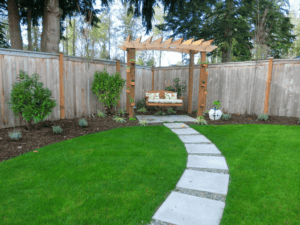
How Many Pavers Per Square Foot Do I Need for My Path?
To calculate your needs, you must first determine the paver path square footage by multiplying the length of the walkway by its width. Once you have the total area, divide it by the square footage of a single paver.
Quick Formula:
Total Pavers = (Path Length × Path Width) ÷ Paver Square Footage × Waste Factor (1.10 or 1.15)
According to the Concrete Masonry & Hardscapes Association (CMHA), a 10% waste factor is the industry standard for straight paths, while curved layouts often require 15% to cover specialized cuts.
Using a Paver Calculator
A paver calculator is the fastest way to get a rough estimate. Most standard pavers come in sizes like 4×8, 6×6, or 12×12 inches. For example, if you’re using 4×8-inch bricks, you’ll need approximately 4.5 pavers per square foot.
However, the paver size guide varies significantly between concrete pavers and natural stone, so always verify the exact dimensions before ordering.
Paver Estimation Table
| Paver Size (Inches) | Square Feet Per Paver | Pavers Needed Per 100 Sq. Ft. (Incl. 10% Waste) |
|---|---|---|
| 4 × 8 | 0.22 | 500 |
| 6 × 6 | 0.25 | 440 |
| 12 × 12 | 1.00 | 110 |
| 16 × 16 | 1.77 | 63 |
💡 Pro Tip: For rain garden paths with organic curves or irregular edges, always order at 15% overage rather than 10% to avoid material shortages mid-install.
Why Use Permeable Pavers in Seattle Rain Gardens?
Permeable paving in the PNW is designed specifically to allow water to seep through the joints and into a specialized stone base. This reduces stormwater runoff, prevents local flooding, and filters pollutants before they reach Puget Sound.
Depending on design, permeable paving can infiltrate 70–80% of annual rainfall, and studies show overall stormwater reduction effectiveness ranging from 25% to 100%. In many West Seattle and Eastside neighborhoods, installing these systems can help you qualify for the RainWise rebate, which can cover most or all of your installation costs, with the rebate reaching up to $7.90 per square foot of rooftop runoff control.
RainWise Rebate: A joint program by the City of Seattle and King County that reimburses eligible homeowners for rain garden and cistern installation. The rebate can be up to $7.90 per square foot of rooftop runoff controlled, with an average payout of approximately $4,800.
Benefits of Permeable Paving
-
- Reduce Runoff: These systems can handle heavy rainfall, keeping water out of the city’s overwhelmed sewer pipes.
- Prevent Erosion:By slowing down water flow, you protect your Pacific Northwest rain garden plants and topsoil.
- Moss Control:Better drainage means less standing water, which helps reduce moss growth on your walkways during the damp winter months.
- Year-Round Usability: A well-drained path stays safe and accessible for foot traffic even during the wettest months.
Permeable Paving: A paving system designed to allow water to seep through joints and into a specialized stone base below, reducing stormwater runoff, preventing local flooding, and filtering pollutants before they reach Puget Sound.
What is the Best Rain Garden Path Design for the Eastside?
The best rain garden path design balances functionality with the natural aesthetics of the Eastside. Many homeowners prefer a natural stone garden path or stepping stones for a rain garden because they blend seamlessly into the landscape.
For a more formal look, a paver pattern like herringbone or running bond provides structural integrity and a polished finish that complements Pacific Northwest architecture. The herringbone pattern’s interlocking design is especially suitable for high-traffic paths, each paver locks against its neighbor, distributing load more evenly than a standard running bond.
Pattern Quick Reference:
- Herringbone (45° or 90°): Maximum structural integrity; ideal for high-traffic areas or sloped paths
- Running Bond:Clean, versatile, minimal waste; better for budget-conscious straight paths
- Stepping Stones with Gravel:Best for water flow, wide joints allow maximum permeation into soil
Professional Landscape Design in Seattle and the Eastside
When planning a project, a professional landscape design for the Seattle Eastside should account for soil composition and slope. In areas like Redmond, the soil can be heavy with clay, requiring a deeper gravel base for your path to prevent shifting. Our hardscape installation ensures that your path remains level and beautiful for decades.
Steps for a Successful Installation
- Calculate Square Footage:Measure the path area and the amount of roof runoff you intend to redirect into your rain garden.
- Excavate:Remove soil to the required depth for your base materials and pavers.
- Install Base & Bedding: Use crushed gravel and sand to create a stable, draining foundation.
- Lay Pavers: Follow your chosen pattern (like a running bond or herringbone) to ensure stability.
- Secure Edging:Install edge restraints to prevent the path from spreading over time.
Why This Matters for Seattle Specifically: The Seattle Stormwater Code (effective July 1, 2021) requires stormwater management compliance for projects adding or replacing more than 750 square feet of hard surface. Permeable pavers may help your project meet these code thresholds and qualify for green infrastructure incentives.
How Do I Prevent Flooding with Sustainable Landscaping?
Sustainable landscaping in Seattle focuses on “slowing, spreading, and sinking” rainwater. By combining a rain garden with permeable pavers, you create a high-capacity water management system on your property. This approach can reduce stormwater runoff by over 90% compared to traditional, non-porous concrete driveways or patios.
Strategic Plant and Stone Placement
Integrating stone pavers with Pacific Northwest rain garden plants like Sword Ferns or Red Osier Dogwood creates a functional ecosystem. These plants thrive in the wet-and-dry cycles of a rain garden and help soak up excess water. Using natural stone as accents can also guide water toward the basin of the garden, preventing pooling near your home’s foundation.
Why This Matters: Seattle’s combined sewer system was built for a pre-development landscape. When rain hits impervious surfaces, it can overwhelm sewer infrastructure and send untreated water into Puget Sound. A permeable paver path connected to a rain garden is one of the most impactful DIY or professional interventions a homeowner can make.
FAQ
How do I calculate how many pavers I need for a Seattle rain garden path?
Refer to our Paver Estimation Table above for precise quantities based on your chosen stone size. As a rule, always include a 10–15% waste factor to ensure you have enough material for custom cuts and breaks.
What size pavers are best for a rain garden path?
12×12-inch or 16×16-inch pavers are popular for Seattle rain garden paths because they cover more area per stone and create wider joints that support water drainage. For a stepping-stone look, 16×16-inch pavers with gravel joints are a low-maintenance, high-drainage option.
How much does a rain garden path cost in Seattle?
Costs vary based on materials, but professional landscape design and installation typically range from $15 to $30 per square foot. Many Seattle homeowners offset this cost by utilizing the RainWise rebate.
Can I use regular pavers for a rain garden path?
While you can use standard concrete pavers, they don’t allow water to pass through them. To truly support a rain garden’s function, it’s better to use permeable pavers or wide-set stepping stones with gravel in between to allow water to seep into the ground.
What is the best paver pattern for stability on a rain garden path?
The interlocking herringbone pattern is ideal for managing high-volume surface runoff on sloped paths without shifting the base. For lighter walkways with minimal slope, a running bond pattern minimizes cutting waste while maintaining good structural integrity.
Does a rain garden require a lot of maintenance?
Rain gardens are designed for low maintenance. Once the Pacific Northwest rain garden plants are established, they require minimal watering in the summer and simple weeding or mulching once a year.
What is the RainWise rebate, and do I qualify?
The RainWise rebate is a City of Seattle and King County program that reimburses eligible homeowners for installing rain gardens or cisterns. The rebate can be up to $7.90 per square foot of rooftop runoff controlled, with an average payout of approximately $4,800.
Does Seattle have stormwater regulations that affect paver path installation?
Yes. The 2021 Seattle Stormwater Code applies if you’re adding or replacing more than 750 square feet of hard surface. Using permeable pavers can help your project meet these requirements and may qualify you for green stormwater infrastructure incentives from Seattle Public Utilities.
Transform Your Seattle Outdoor Space
By accurately calculating the pavers you need and opting for a sustainable landscaping approach, you eliminate common worries like poor drainage and sinking walkways while significantly boosting your property’s curb appeal and resale value.
Don’t let the next big Seattle storm leave you with a muddy mess or a flooded yard. Whether you are managing runoff in Ballard, navigating a sloped yard in Queen Anne, or installing a rain garden in Capitol Hill, Redmond, or West Seattle, our in-house craftsmen are ready to help.
We handle everything from the initial design to the final stone placement, ensuring a stress-free experience from start to finish. Investing in a professionally designed rain garden path is more than just an aesthetic choice; it’s a commitment to protecting your home.
If you’re ready to start your project, reach out and schedule your consultation today or give us a call at (425) 861-3535.