
Direct Answer
The best choice between sod and synthetic turf in Seattle depends on your yard’s sunlight, pet usage, and budget, but both require a proper drainage plan to survive. In Seattle’s wet climate and clay-heavy soil, treating the installation as a drainage project first is the only way to prevent a soggy, failing lawn.
- Sod is a living turf that works best for large, sunny lawns and homeowners with lower installation budgets.
- Synthetic turf is an artificial surface that is the superior choice for dogs, deep shade, and ongoing mud problems in small spaces.
- Both surfaces rely on a three-part system of grading, French drains, and catch basins to safely move water away from your foundation.
- Water remaining on the lawn for more than 24 hours after a storm is a clear sign that the yard’s drainage system is failing.
- Cutting drainage work to save money upfront usually leads to expensive retrofitted French drains or a completely rebuilt turf base later.
- Synthetic turf carries a higher upfront cost than sod due to the required rock base and excavation, though water and product savings offset this over time.
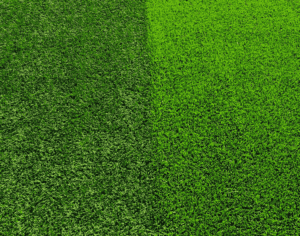
In Seattle’s wet climate, choosing between sod and synthetic turf really means choosing between two drainage strategies. Seattle averages roughly 38 inches of rain a year, per NOAA climate normals data, mostly onto compacted, clay-heavy soil that drains slowly, so projects here succeed or fail on excavation, base depth, and where the water ends up.
- Seattle’s most common lawn frustration is paying for a “perfect” yard that turns soggy after heavy rain.
- Depending on drainage, maintenance, and pets, sod or synthetic turf can be the right call.
Green Spaces Landscaping treats every Seattle lawn decision as a drainage project first, and a surface choice second.
What Is the Difference Between Sod and Synthetic Turf?
Quick definition: Sod is natural grass grown on farms and installed as living turf over prepared soil. Synthetic turf is an artificial surface made from plastic fibers over a compacted, permeable base. The right choice depends on drainage, sunlight, pets, and budget more than looks.
Seattle’s Muddy Yard Problem and Local Lawn Realities
Seattle’s main lawn problem is compacted soil that can’t move water away from the house, leading to waterlogged lawns and mud tracked indoors all winter. Clay-heavy soil plus a long wet season means water sits instead of draining, so roots suffocate and the lawn thins out, showing up as puddles near patios, muddy corridors between houses, and bare, slick soil under conifer canopy.
The real fix is usually grading and drainage work, not re-sodding. We consistently find that standing water and poor sub-base conditions, not fertilizer or mowing habits, are why a newly re-sodded lawn fails again.
Natural Grass and Sod in the Pacific Northwest Climate
Natural grass thrives here if you accept summer dormancy and focus on fall rehab instead of fighting the climate. Perennial ryegrass, the most widely used lawn grass in western Washington per WSU Extension, suits our mild temperatures, and WSU frames summer dormancy as a normal, water-saving pause, not a failure. A lawn with good grading and healthy soil handles a dry summer and wet winter equally well, one on compacted ground struggles in both.
Moss, one of Seattle’s most common lawn complaints, is usually a symptom of compacted, acidic, shaded soil per WSU Extension, not a lack of moss killer.
Choosing Artificial Turf and Synthetic Grass for Seattle Homes
Artificial grass suits high-traffic or shaded yards, but only if its base, drainage, and cleaning plan are built for local rain and pets. A quality system is synthetic grass over a compacted rock base with infill that lets water pass through, staying green without watering or mowing.
We treat every installation as a drainage and hygiene project first, especially in pet-heavy yards: faster-draining infill, a rinse-friendly base, and regular rinsing with an occasional enzyme treatment for odor. Skip that and a low-maintenance yard turns soggy fast.
The Make-or-Break Factor in Sod vs Synthetic Turf
Whichever surface you pick, it sits on the same three-part system:
- Grading: shapes the yard to shed water toward a safe exit, not the house or a fence line.
- French drains: perforated pipe in gravel, wrapped in geotextile fabric, that intercepts underground water before it reaches a foundation.
- Catch basins: a grated box at a low point that collects runoff and routes it into a pipe.
Under synthetic turf, the rock base has to support the surface and move water at once, so a missing catch basin shows up faster than under a natural lawn.
How Poor Drainage Leads to Puddles, Pooling, Standing Water, and Mold Growth
- Flat or reversed grading sends water toward the house instead of a safe outlet.
- An undersized rock base or a missing catch basin traps water, and persistent standing water invites moss, mold, and mildew.
Cutting drainage work to save money upfront usually costs more later, in retrofitted French drains or a rebuilt turf base. Under the City of Seattle’s stormwater code, water also can’t be routed onto a neighboring property without an approved discharge point.
Seattle Drainage Checklist Before Choosing Sod or Turf
Check your yard after a real rain. Two or more signs means a drainage talk before picking a surface:
- Does water remain on the lawn longer than 24 hours after a storm?
- Does moss return every winter no matter what you treat it with?
- Is the soil mostly clay, or does it stay compacted and hard when dry?
- Does water pool instead of soaking in within a few minutes of a simple hose test?
Cost Comparison: Sod vs Turf Lawn in the Greater Seattle Area
The real cost gap between sod and turf comes from excavation and base work, not the surface material. Turf adds a substantial rock base and edging, so it costs more upfront, though water and product savings offset part of that gap over time.
The costliest mistake is comparing sticker price per square foot while ignoring access, slope, and drainage. Tight alley access in Ballard or steep West Seattle yards can push costs higher, which is why a site visit beats any online calculator.
When Sod Wins, When Synthetic Turf Wins
| When Sod Wins | When Synthetic Turf Wins |
|---|---|
| Large, sunny lawn | Small or narrow backyard |
| Lower installation budget | Dogs or heavy pet use |
| Homeowner willing to mow and maintain | Deep shade where grass struggles |
| Soil can be improved with grading and amendments | High foot traffic areas |
| Want the classic look and feel of a real lawn | Ongoing mud or drainage problems in a small space |
Real Questions Seattle Homeowners Ask Before Choosing Sod or Turf
How Do I Know If My Yard Needs a New Drainage System?
Standing water or soggy soil for days after storms are the main signs, see the checklist above.
Is Sod or Synthetic Turf Better for Dogs in Seattle?
Both work, but well-drained, easy-to-clean turf usually handles pet traffic better in small yards.
Does Synthetic Turf Get Hot in Seattle?
On a sunny afternoon it can run hotter than grass, though Seattle’s cloudy summers make this rare, a hose-down and lighter infill help on hot days.
Does Synthetic Turf Increase Home Value?
It varies by market and buyer, percentages quoted online come from turf marketing, not appraisal data, so ask a local agent about your neighborhood.
Can Synthetic Turf Be Installed Over Clay Soil?
Yes, but only with a properly engineered, permeable rock base, not turf laid straight over compacted clay.
How Long Does Sod Take to Root in Seattle?
Shallow roots form in about two weeks, with full establishment taking another four to six weeks depending on watering and season.
Schedule Your Seattle Sod or Synthetic Turf Consultation
A local consultation is the fastest way to find the right lawn system for your yard. Explore our Seattle landscaping services or call Green Spaces Landscaping at (425) 861 3535 to request your consultation to get a clear, local plan that designs for drainage first.