
Direct Answer
Installing synthetic turf in Seattle requires professional sub-base preparation and specialized infill to handle the region’s heavy rainfall and clay soils. A successful installation must comply with local stormwater runoff regulations and utilize heat-resistant and antimicrobial materials to ensure a durable, pet-safe, and odor-free yard.
- Standard silica sand infill does not sanitize artificial lawns, as winter rainfall actually reactivates pet urine odor and fuels moss growth.
- Energy-efficient Low-E double-pane windows can focus reflected sunlight into hot spots reaching 175 degrees Fahrenheit, which will melt standard synthetic fibers.
- To keep the yard smelling fresh and prevent ammonia smells, use a zeolite-based or antimicrobial-coated sand infill like OptiFILL.
- The Seattle 2021 Stormwater Code SMC 22.801.170 officially classifies synthetic turf as a pollution-generating pervious surface, requiring strict runoff management.
- Budget-cut installations that skip excavation and a 3 to 4-inch compacted rock base often fail within seasons due to poor drainage on Seattle clay.
- A professional, drainage-compliant installation in King County typically ranges from $11 to $16 per square foot all-in.
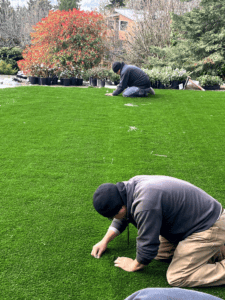
Seattle homeowners installing synthetic turf in 2026 must navigate heavy rains, clay soil, and strict local stormwater codes. Achieving an enduring, high-performance yard requires investing in professional sub-base preparation and antimicrobial-coated sand or zeolite infill rather than standard sand. By avoiding low-cost shortcuts, residents can secure a clean, pet-safe, and odor-free lawn alternative that resists moss and standing water year-round.
Items to be Aware of:
- Warning: Seattle’s frequent winter rainfall does not sanitize artificial lawns, it actually reactivates pet urine odor and fuels moss growth in standard silica sand infill.
- Cost: A professional, drainage-compliant installation in King County typically ranges from $11 to $16 per square foot all-in.
- Rule: The Seattle 2021 Stormwater Code SMC 22.801.170 officially classifies synthetic turf as a pollution-generating previous surface, requiring strict runoff management.
- Comparison: High-quality non-toxic turf systems outlast natural grass with minimal maintenance, whereas budget-cut installations fail within seasons due to poor base prep.
- Pro-Tip: Booking your project in late January or February can ensure your project is ready for the summer season.
Seattle lawns are notorious for turning into soggy, moss-ridden mud pits between October and April. For homeowners from West Seattle to the steep slopes of Beacon Hill, maintaining a lush lawn is a constant struggle against clay-heavy soils and overcast skies. Replacing failing grass with high-quality synthetic turf resolves these headaches, offering a durable, vibrant yard.
However, installing fake grass in the Pacific Northwest requires a deep understanding of local drainage requirements and climate challenges. Here is what you need to know to avoid costly installation mistakes.
Why Seattle Homeowners Are Ditching Natural Grass for Synthetic Turf
Growing grass in Western Washington is a notorious challenge. With over 150 overcast days annually and heavy clay soils, residential lawns quickly become moss-ridden muddy bogs. Modern homeowners are transitioning to synthetic turf because it provides a clean, green, mud-free surface regardless of the weather. These advanced systems offer exceptional durability and a lifespan of fifteen to twenty years, making them highly effective low-maintenance lawn alternatives 2026 residents are adopting to reclaim their weekends.
The Real Problem With Traditional Lawns in the Pacific Northwest
- Clay soils prevent drainage, leaving standing water and slick mud across residential properties.
- Evergreen tree canopies block sunlight, causing real turf to thin out while moss and weeds thrive.
- Artificial surfaces remain vibrant year-round without requiring fertilizing, aerating, or mowing.
What Is Synthetic Turf and How Much Does It Cost in Seattle?
High-performance artificial turf relies on specialized grass blades tufted into a highly permeable backing and supported by a specific infill material. When evaluating synthetic turf cost vs. natural grass, homeowners must look past the initial price of materials to consider long-term savings on water, seasonal treatments, and professional mowing.
While budget-conscious DIYers attempt shortcuts, a professional installation is required to prepare the sub-base and ensure the synthetic grass drains properly under the heavy precipitation of the Pacific Northwest.
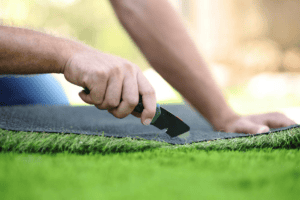
Breaking Down the Layers: Grass Blades, Infill, and PFAS-Free Materials
Synthetic Turf Cost vs. Natural Grass: The Seattle Cost Breakdown
| Service or Option Type | Average Cost (Per Sq. Ft.) | Notes and Caveats |
|---|---|---|
| Professional Synthetic Turf Installation | $11.00 to $16.00 | Includes excavation, 3 to 4 inches of compacted rock base, premium turf, and infill. |
| DIY Synthetic Turf Installation | $6.00 to $9.00 | Excludes heavy equipment rental: high risk of drainage failure on Seattle clay. |
| Natural Grass Sod Installation | $2.50 to $4.50 | Low upfront cost: requires annual fertilizing and mowing. |
| Basic Grass Seeding (DIY) | $0.50 to $1.50 | Lowest upfront cost: requires constant watering and high weed risk. |
| Routine Mowing and Lawn Care | $0.00 | Free if you own a mower and perform all labor yourself. |
Figures may vary. Verify with a local provider.
- Professional installations include excavation of native clay, rock grading, and custom seaming.
- Low-ball quotes of $6 to $8 per square foot typically exclude necessary base preparation work.
- Quality materials are treated with UV stabilizers and are completely lead-free and PFAS-free for family safety.
The Hidden Costs Seattle Installers Don’t Always Quote Upfront
Most Seattle landscape providers won’t tell you this, but energy-efficient Low-E double-pane windows on modern homes can focus reflected sunlight into hot spots reaching 175 degrees Fahrenheit. This intense heat will melt standard synthetic fibers, ruining your turf. If you live in newer construction areas like Ballard, you must specify heat-resistant turf products or add protective screens to safeguard your yard.
Water-Saving Landscaping and Seattle’s Strict Stormwater Regulations
Residential synthetic surfaces do more than just replace basic grass: they are ideal for custom backyard putting setups and soft, cushioned playground zones that are safe for children and pets. Choosing turf significantly reduces summer utility bills and prevents chemical pesticides from entering the regional watershed, making it a highly popular environmentally friendly option.
However, because our clay soil does not absorb rainwater easily, a well-engineered drainage base is required to handle high-volume rainfall without pooling or eroding neighboring properties.
Conserving Resources: Water-Saving Landscaping and Environmental Impacts
- Synthetic lawns save thousands of gallons of water during increasingly dry Western Washington summers.
- Custom golf setups use dense, short-pile fibers to provide a professional rolling green at home.
- Play areas require thick shock-absorbing foam underlayment to meet IPEMA safety standards for fall height.
Navigating Seattle’s Stormwater Code and Backyard Putting Greens
In Seattle, this matters because our city’s strict municipal guidelines catch many buyers off guard. Under Seattle Department of Construction and Inspections SMC 22.801.170, synthetic turf is classified as a pollution-generating pervious surface. With new stormwater updates scheduled for July 1, 2026, targeting product pollutants, you must work with an installer who understands how to design a fully permeable, code-compliant drainage system.
Pet-Friendly Turf for Backyards and Professional Installation Steps
Escaping muddy paws is the main reason dog owners invest in synthetic pet turf. However, installing fake grass in our climate requires professional expertise to avoid long-term odor issues. The standard process for artificial grass installation involves excavating several inches of soggy soil, applying a permeable weed barrier, laying a stable crushed-rock sub-base, and seaming the turf panels together.
Without these critical steps, pet waste will saturate the underlying ground, creating a persistent, damp odor that rain cannot wash away.
Pet-Friendly Turf for Backyards: Managing Odors in the Seattle Wet Season
- Woven geotextile fabric weed barriers allow maximum water flow, unlike cheap solid plastic sheets.
- A three to four-inch compacted aggregate base provides a highly stable foundation that prevents pooling.
- Antimicrobial infill prevents uric acid crystals from binding to the fibers and causing ammonia smells.
Professional Installation: Why Sub-Base Preparation Is Non-Negotiable
What most guides get wrong about installing synthetic pet turf is claiming that Seattle’s frequent rainfall acts as a natural cleaning rinse. Rain does not wash away uric acid crystals: instead, moisture rehydrates the crystals and intensifies the ammonia smell.
To keep your yard smelling fresh, you must use a zeolite-based or antimicrobial-coated sand infill like OptiFILL, which actively neutralizes pet odors and resists USDA Forest Service concerns and Western Washington’s notorious moss.
FAQ: Frequently Asked Questions About Seattle Artificial Turf
Is synthetic turf safe for children and pets in Seattle?
Yes. High-quality Seattle artificial turf is completely non-toxic, lead-free, and safe for children and pets. Choosing an IPEMA-certified installation ensures superior shock absorption for play areas.
How much does synthetic turf cost per square foot in Seattle, WA?
Professional installations typically align with the regional rates detailed in our cost comparison table above, which include full site preparation and excavation.
Does Seattle’s stormwater code require a permit to install artificial grass?
While small residential installations under 2,000 square feet rarely require a full stormwater permit, homeowners must design a permeable base to comply with regional runoff codes detailed in our stormwater section above.
How do I stop my artificial turf from smelling after rain?
You can stop odors by avoiding silica sand infill and rinsing the area with a specialized enzymatic cleaner as described in our pet-friendly turf guide above.
What is the best turf infill for a rainy climate like Seattle’s?
Zeolite-based infill or antimicrobial-coated sand like OptiFILL is the best choice for our wet climate. These materials resist compaction, neutralize ammonia from pet waste, and actively inhibit moss colonization.
Ready to Install Artificial Turf in Seattle? Here’s How to Start
If you are ready to upgrade your muddy yard to a vibrant, mud-free lawn, partner with an experienced, professional artificial turf installer in Seattle. At Green Spaces Landscaping, we provide premium Seattle artificial grass installations across Seattle and the surrounding counties.
Contact our skilled team today to schedule your consultation and get a detailed, honest quote for your property.